


Five Simple Tips for Improving Your Balance
Avoid Falls and Stay on Your Feet–With a Little Help from Physical Therapy
Are you worried about falling and injuring yourself? Does limited mobility due to arthritis or another condition make you feel shaky? Balance challenges can certainly be difficult, but you do have options for improving your overall balance and stability!
One of the things we do at Darien Physical Therapy Sports & Fitness is help people work on the spatial awareness and muscular strength crucial in addressing balance challenges. This is especially true for people with a high risk of falling, where improved balance could save you a trip to the hospital.
Want to learn more about the importance of good balance? Call to schedule an appointment today.


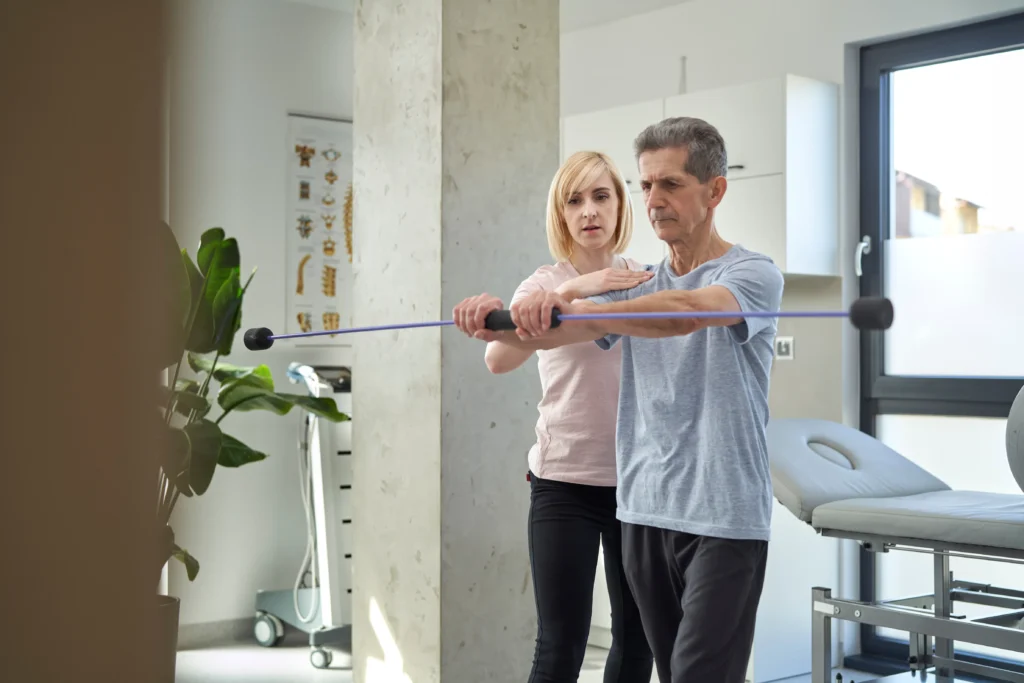
Why Should I Work on My Balance At All?
The older you get, the more important good balance becomes. Falls are one of the biggest threats to adults 65 years or older, causing millions of hospitalizations and emergency room visits every year.
While several factors contribute to this high fall risk–including age-related sensory and physical changes–you can do things to lessen your risk, and it’s never too early to get started! If you start working to improve your balance now, you’ll be in a better place as you age.
That said, there are other benefits to improving balance for younger people. A good sense of balance has a radiating effect on your overall fitness, helping to improve your posture and overall movement. You’ll be better able to catch yourself if you stumble or trip, and you might notice improvements in other physical activities, like running or playing sports.
Exercise of the Month
One Leg Balance
(Ankles, Core, Balance)
With your hands on the back of a chair, countertop, or wall, slowly lift your uninjured leg upward behind you so that your weight lies on the leg with the injured ankle. Hold this position for 20 to 30 seconds and gradually progress to more seconds as you get stronger. 2 Sets, 1 Rep. (Materials needed: chair)
How Can I Improve My Balance? Five Suggestions from Our Physical Therapists
- Go for a Walk: Sometimes, the best solutions are the simplest. Walking helps build core and lower-body strength, two crucial components of good balance, and it’s safe and effective for most people. That said, if you’re struggling with balance, it’s important to speak to your physical therapist first–you might benefit from initial balance training or using a mobility aid during your walks.
- Restore Your Mobility: Stiff or arthritic joints can negatively impact your balance. Our physical therapists can teach you how to restore or improve your mobility and guide you on a safe routine you can perform at home that targets your individual needs.
- Target Your Core: If you’re really struggling with balance and instability, it may be time to focus on dedicated core exercises. Your core refers to the muscles that wrap around your spine–your back, hip, glute, and ab muscles. They keep your spine stabilized, which in turn helps you keep your balance. Not sure where to start with core strengthening? Our physical therapists can show you which exercises will work best for you.
- Challenge Your Balance: As with any other aspect of fitness, spending time on dedicated balance training can help you see results. Your goal is to find exercises that challenge your sense of balance without putting you at risk of falling–again, this is something our PTs can help with.
- Assess Your Balance: If you want to get serious about improving your balance, schedule an appointment at Darien Physical Therapy Sports & Fitness to have your balance assessed by one of our experts. We’ll run several balance screens to help us pinpoint the exact reason for your balance challenges–it may even be something you didn’t expect, such as inner ear issues. With a balance assessment, we can help you target your treatment to suit your exact needs.
Afraid You’ll Lose Your Footing? We’ve Got Your Back
The physical therapists at Darien Physical Therapy Sports & Fitness specialize in movement and exercise. If you visit us for a balance assessment, we can design a customized treatment program that addresses your needs and abilities. For example…
- Dealing with persistent pain that makes walking difficult? We can guide you through a drug-free pain management program.
- Find most core exercises impossible? You’re not alone. Although activities like core planks have significant benefits, many beginners need to build up to them. We’ll show you core exercises that you can actually perform.
- Not sure how to challenge your balance? We’ll guide you through a progress balance training program, measuring your progress and increasing intensity as you go.
Don’t miss out on the benefits of good balance. Call us to request your balance assessment today!
Sources: https://www.cdc.gov/falls/facts.html, ttps://www.physio-pedia.com/Balance_Training
Nutrition and Movement: Partners In Joint Health
By Christine Updegraff, MS, Bellwether Wellness
When it comes to maintaining comfortable, flexible joints, physical therapy exercises are only half the story. The other half happens at the dinner table. What you eat can either nourish your joints or quietly add to inflammation and stiffness.
Joints are made up of cartilage, ligaments, and connective tissue—all of which depend on specific nutrients to stay strong and resilient. Collagen peptides, vitamin C, and amino acids are the building blocks of this repair process. Without them, tissue recovery after injury or wear and tear becomes more difficult.

One option to support joint health is Arthroben®, a scientifically formulated supplement from Designs for Health. It contains Fortigel® and Tendoforte®, two patented forms of collagen peptides shown in clinical studies to help improve joint comfort, flexibility, and mobility by strengthening tendons and ligaments. Arthroben is easy to mix into water (the lemon-lime flavor is popular) and can complement your physical therapy routine by providing nutritional support for the tissues you’re working to strengthen.
In addition to supplementation, a joint-friendly diet includes colorful fruits and vegetables for antioxidants, omega-3 fats from fish or flaxseed to reduce inflammation, and lean protein to supply amino acids for tissue repair. Try to minimize added sugars, fried foods, and refined carbs (white flour and starch products), which can increase inflammatory markers and slow healing.
By pairing your PT exercises with smart nutrition choices—and adding targeted support like Arthroben—you can give your joints the best possible environment to stay strong, mobile, and pain-free.
Ask your therapist or the Bellwether Wellness nutrition team about incorporating Arthroben into your daily routine.
Stop by the front desk, call 203-309-0045, or visit www.bellwetherwellness.com to book an appointment.

Creamy Tuscan Chicken
- 2 tablespoons olive oil
- 4 boneless, skinless chicken breasts (or thighs)
- Salt and pepper to taste
- 3 cloves garlic, minced
- 1 cup cherry tomatoes (halved)
- 2 cups baby spinach
- ½ cup sun-dried tomatoes (optional but flavorful)
- 1 cup heavy cream
- ½ cup chicken broth
- ½ cup grated Parmesan cheese
- 1 teaspoon Italian seasoning (or mix of basil, oregano, thyme)
- Sear the chicken: Heat olive oil in a large skillet over medium heat. Season chicken with salt and pepper, then cook for about 5–6 minutes per side until golden brown and cooked through. Remove and set aside.
- Make the sauce: In the same pan, add garlic and cook for 30 seconds. Add cherry tomatoes and sun-dried tomatoes. Cook until tomatoes start to soften.
- Add cream and broth: Pour in heavy cream and chicken broth. Stir in Parmesan and Italian seasoning. Simmer 3–4 minutes until thickened slightly.
- Combine: Add spinach and stir until wilted. Return chicken to the pan, spooning sauce over top. Simmer another 3 minutes to meld flavors.
- Serve: Serve hot over mashed potatoes, rice, or pasta.